The Hours Nobody Talks About: What Shinjuku Actually Becomes After 3 AM
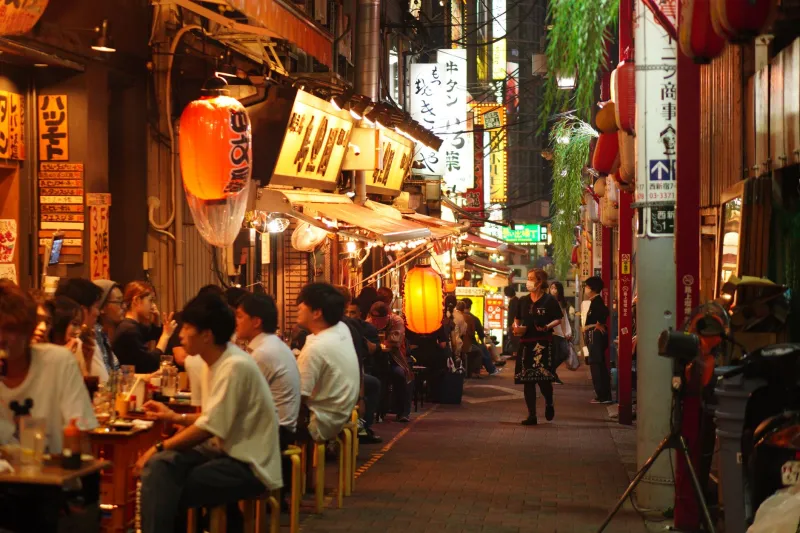
Every travel guide will tell you to experience Shinjuku at night. They mean golden hour Kabukicho photos and dinner reservations and maybe a drink or two before catching the last train home. They mean the Shinjuku that's built for tourists—beautiful, accessible, well-lit, and fundamentally incomplete.
The Shinjuku that matters most doesn't start until most of those people are already asleep.
The Thinning of the Crowd
Something happens between 2 and 3 AM in Shinjuku that's hard to describe unless you've watched it unfold in real time. The casual visitors peel off. The people who came to say they went somewhere go home to tell the story. The office workers who stretched happy hour into a late night quietly disappear. What's left is a self-selected group of people who are here because this is exactly where they want to be.
That selection process changes the entire social texture of a room.
"My favorite part of the night is when the crowd gets smaller but more interesting," says Naomi Ito, who has managed a Shinjuku bar for nearly eight years. "The people who stay past 2 AM—they're not here by accident. They made a choice. That intention shows up in how they interact, how they listen, how they treat the space."
For American visitors used to last call at 2 AM and the aggressive shuffle toward the exit that follows, this is a genuinely disorienting experience. The bar doesn't kick you out. The night doesn't end. It just... reorganizes.
What Neuroscience Says About Late-Night Aliveness
There's a real physiological dimension to the 3 AM phenomenon that goes beyond cultural explanation. Research on circadian rhythms and alertness suggests that night owls—and a significant portion of the population skews that way—experience a secondary alertness peak in the late-night hours that mimics the morning cortisol rise that early risers get at 7 AM.
For these people, the hours between midnight and 4 AM aren't a fight against fatigue. They're a window of genuine cognitive and emotional openness. Inhibitions are lower not because of alcohol alone, but because the brain's social gatekeeping functions genuinely relax during these hours in night-oriented individuals.
"There's a reason the best conversations of your life probably happened after midnight," says one neuroscience-adjacent perspective shared by a regular at a Shinjuku jazz bar who works in behavioral research. "The brain is more willing to make connections—between ideas, between people—when it's been running long enough to stop performing and start actually thinking."
Shinjuku, with its density of intimate late-night spaces, essentially creates the ideal physical environment for that neurological state to express itself socially.
The Performer's Perspective
Ask musicians who've played late sets in Shinjuku about the difference between an 11 PM show and a 3 AM show, and you'll hear a consistent theme: the late show wins, almost every time.
"At 11, the audience is warming up. They're deciding whether they like you," says Darnell Hughes, an Atlanta-based jazz bassist who has performed in Shinjuku on three separate tours. "At 3 AM, that evaluation period is over. The people still in the room have already committed. They're not watching you—they're with you. That's a completely different thing to play into."
Venue operators notice it too. The performance quality in the late hours often surprises even experienced bookers. Artists who turned in a solid but unremarkable early set will sometimes deliver genuinely transcendent late-night performances—not because they're more skilled at 3 AM, but because the room gives them something different to respond to.
"The energy is circular," says Ito. "The crowd feeds the performer, the performer feeds the crowd. When everyone in the room has chosen to be there, that circle gets very tight."
Why Americans Specifically Feel It So Hard
There's a particular quality to the way American visitors describe their late-night Shinjuku experiences—a kind of surprised intensity that comes up again and again in conversations. Part of it is novelty: the US has a complicated relationship with late-night culture, shaped by last call laws, suburban geography, and a cultural premium on early productivity that makes staying out past 2 AM feel vaguely transgressive.
In Shinjuku, that transgression doesn't exist. Nobody is checking a clock. Nobody is anxiously calculating how wrecked they'll be for their 9 AM. The infrastructure of the night—the trains that run again at 5 AM, the all-night ramen spots, the venues that don't dim the lights until dawn—communicates a clear message: this is a legitimate way to use your time.
For Americans who've internalized the idea that nightlife is something you squeeze in before real life resumes, that permission structure is quietly revolutionary.
"I stayed until 4:30 on my first trip," admits one New York-based marketing consultant who now makes annual trips to Tokyo. "I kept waiting for someone to tell me it was time to go. Nobody did. And somewhere around 3 AM I stopped waiting and just... existed in the room. I don't think I've ever felt more present at a bar in my life."
The Argument for Staying
This is, ultimately, a case for missing your sleep. Not recklessly, not every night, but at least once—at least one night in Shinjuku where you don't preemptively book a 9 AM checkout or set an alarm that makes the whole thing feel finite before it starts.
The neon doesn't dim. The music doesn't stop. The conversations get better. The crowd gets smaller and stranger and more real. And somewhere in those hours that no travel guide covers, you find out what Shinjuku actually is.
It's worth staying up for.