Why Shinjuku Sounds Different: The Engineering Behind Tokyo's Best Live Music Rooms
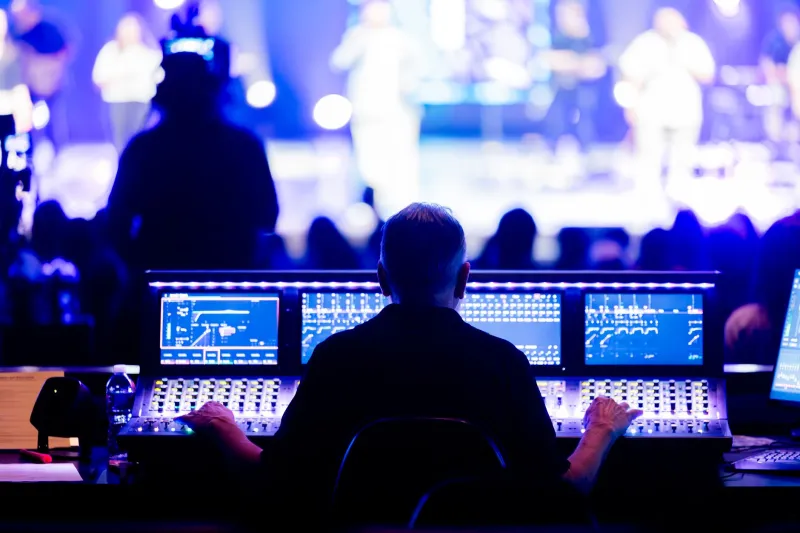
You walk into a venue and something clicks. The music hits differently—fuller, more present, like the room itself is leaning in. You can't explain it while it's happening. You just know you're somewhere that gets it right.
That feeling has a technical explanation. And in Shinjuku, it's not accidental.
The Room Is the Instrument
Before a single cable gets plugged in, before soundcheck, before the first note—the room itself is already shaping what you're going to hear. Wall materials, ceiling height, floor surface, the distance between the stage and the back wall: all of it interacts with sound waves in ways that either work for you or against you.
Shinjuku's best live rooms tend to sit in a specific size range—roughly 150 to 400 capacity—that acoustic engineers sometimes call the "sweet spot" for live music. Large enough to generate crowd energy, small enough that natural reverb doesn't turn into echo soup.
"American venues often go too big too fast," says Hiroshi Kato, a sound engineer who has worked with both domestic Japanese acts and international touring artists at several Shinjuku venues over the past decade. "They want the room to feel impressive. But impressive and intimate are different things. The best listening experiences happen when the room feels like it was built around the music, not the other way around."
Concrete, Brick, and the Case Against Drywall
Walk through the back streets of Kabukicho and you'll notice something about the buildings housing Shinjuku's most respected live rooms: they're old. Not decrepit—maintained, often lovingly—but old. And that matters acoustically.
Older construction in this part of Tokyo tends to favor concrete and dense masonry over the lightweight partition walls that dominate newer commercial builds. For live music, that's a significant advantage. Dense walls absorb low-frequency rumble without killing the mid-range clarity that makes vocals and guitars cut through a mix. Newer constructions often over-treat their spaces with acoustic foam trying to compensate for what the walls don't naturally provide.
"There's a venue I won't name that spent a lot of money on acoustic panels and still sounds worse than a basement I know in Shinjuku that hasn't been touched since the 1980s," Kato says with a laugh. "The basement has good bones. No amount of foam fixes bad bones."
Stage Geometry Matters More Than You Think
The relationship between stage position and room shape is one of the more underappreciated variables in live sound. Most casual listeners think about the PA system—the speakers, the mixing board, the monitors. What they don't think about is how the stage's physical orientation affects where sound energy builds up and where it dies.
Shinjuku's intimate venues tend to favor stages set against the shorter wall of a rectangular room, which maximizes the distance between the performer and the back wall and reduces the standing wave buildup that makes certain frequencies boom unnaturally in some spots and disappear in others. It sounds like an obvious choice, but plenty of venues—especially in more compressed urban districts—don't have the luxury of choosing.
"We had to fight for our stage position," says the operations manager of a Shinjuku live house that regularly draws touring acts from the US and Europe, speaking on condition of anonymity. "The building owner wanted the stage on the long wall because it looked better for photos. We spent three months convincing him that the room would sound half as good. Ultimately we ran a listening test with a local band. He heard it immediately."
The Human Element: Sound Engineers Who Know the Room
Equipment and architecture only take you so far. The final variable is the person behind the board, and in Shinjuku, that person often knows the room better than anyone.
Venue-resident sound engineers—engineers who work a specific room for years rather than moving between spaces—develop an almost intuitive understanding of how a particular environment behaves. They know which frequencies stack up near the bar. They know the spot three rows back where the bass gets muddy on high-volume nights. They know how much the crowd itself changes the room's acoustic profile when it fills up.
"A full room absorbs differently than an empty one," explains Saki Yamamoto, who has been the primary sound engineer at a Shinjuku venue for six years. "When I do soundcheck, I'm already mentally adjusting for what the room will sound like with 200 people in it. That's not something you can learn from a manual. You learn it from doing the same room hundreds of times."
American musicians who've played Shinjuku repeatedly often cite this institutional knowledge as one of the district's hidden advantages. "Back home, you're often working with an engineer who's never heard the room before and has forty-five minutes to figure it out," says Marcus Webb, a Chicago-based guitarist who has toured through Tokyo three times. "Here, I've had engineers who knew my set better than I did by the time we hit the stage. That changes your whole performance."
Why Shinjuku Specifically?
Other Tokyo districts have live music. Shimokitazawa has a legendary scene. Nakameguro has its moments. But musicians and engineers who've worked across the city consistently rank Shinjuku's rooms among the best-sounding in Tokyo.
Part of it is the building stock. Part of it is the density of serious venues that have invested in their infrastructure over decades. And part of it—not to be underestimated—is the audience culture. Shinjuku crowds listen. They're not passive, but they're attentive in a way that creates its own kind of feedback loop between performer and room.
"When the audience is really listening, the performer changes," Yamamoto says. "They play differently. And when they play differently, the room responds differently. It all connects."
That connection is what you feel when you walk in and something just clicks. Now you know what you're actually feeling.