Read the Room: Shinjuku's Secret Hand Language and What It Means for First-Time Visitors
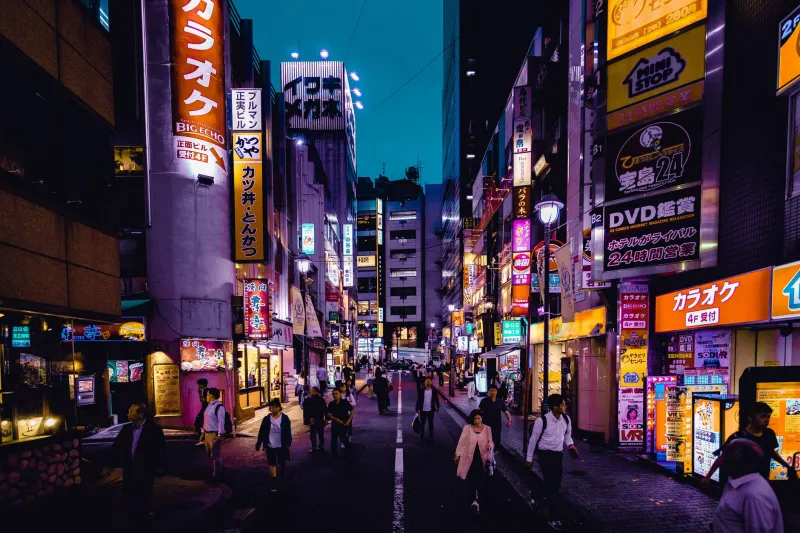
You've landed at Narita, navigated the train system without totally embarrassing yourself, and now you're standing at the entrance of Kabukicho at 10 PM with nowhere to be and everywhere to go. The lights are incredible. The energy is real. And somewhere nearby, a man in a sharp suit just made a small, deliberate gesture with his hand that meant absolutely everything to everyone around him — except you.
Don't stress. That gap between tourist and local in Shinjuku isn't really about language. It's about reading the room, and more specifically, reading the hands.
Why Gesture Culture Runs So Deep Here
Japan has always placed enormous weight on non-verbal communication. In a society where directness can feel abrasive, the body carries a lot of conversational load. But Shinjuku takes this to another level entirely. The district has its own micro-culture — shaped by decades of nightlife, entertainment, and a hospitality industry that operates with almost theatrical precision.
Think about it from a practical standpoint. Kabukicho on a Friday night is loud. Like, really loud. Music bleeding out of hostess clubs, izakayas packed wall to wall, street touts competing for attention from every direction. In that environment, a clear, intentional hand signal isn't just useful — it's the whole communication system.
For venue staff, hosts, and regulars who've spent years navigating these streets, gestures carry weight that words sometimes can't. And for American visitors who grew up in a culture where pointing at things is totally normal and a thumbs-up means everything's fine, some of these signals land completely differently than expected.
The Invitation Gesture: More Than Just a Wave
One of the first things you'll notice around Shinjuku's entertainment corridors is what regulars call the beckoning gesture — a hand extended palm-down, fingers curling slowly inward. In American body language, you might read this as a casual "come here" signal. In Shinjuku's nightlife context, it's a formal, considered invitation.
When a host outside a club uses this motion, they're not just flagging you down. They're extending something closer to a curated welcome — an implicit promise that stepping inside puts you under their care for the evening. There's a social contract baked into that small movement. Acknowledging it with a slight nod, rather than a big American "hey, what's up" wave back, signals that you understand the register.
The distinction matters because Shinjuku's high-end entertainment venues operate on relationship dynamics. Walking in like you own the place reads differently than walking in like you respect the place. The gesture is an opener; how you respond sets the tone for everything after.
The V Sign: Everybody Knows It, But Do You?
Here's where things get interesting for visitors from the States. The V-sign — two fingers raised, palm facing outward — is arguably the most recognized hand gesture in all of Japan. You've seen it in every photo. It's the default pose at every tourist spot from Harajuku to Hiroshima.
But in Shinjuku's after-dark world, the V carries layered meaning depending on context. At a performance venue, a dancer throwing a V toward the crowd isn't just playing cute — it's an acknowledgment, a performer's way of saying I see you, we're connected right now. In a host club setting, a host extending a V with a slight tilt of the wrist can signal availability, openness, an invitation to engage further.
The gesture has been so thoroughly absorbed into entertainment culture here that it's become almost a lingua franca between performers and audiences. You don't need to speak Japanese to understand that a V thrown in your direction during a live set means the energy is mutual.
It's also, not coincidentally, the conceptual heart of what V Hand Shinjuku is built around — the idea that a single symbol can function as a universal entry point into a culture that might otherwise feel opaque to outsiders.
What Tourists Get Wrong (And How to Adjust)
The most common mistake American visitors make isn't offensive — it's just oblivious. Pointing directly at things or people is considered pretty rude across Japan, full stop. In a nightlife venue where everyone is performing some version of elegance and composure, a tourist jabbing a finger toward the stage or at a menu item lands like a record scratch.
Instead, watch how locals direct attention. An open hand, angled toward something rather than pointing at it. A slight tilt of the chin rather than a nod toward a person. These aren't just politeness quirks — they're the visual grammar of the space.
Another adjustment worth making: the enthusiastic American thumbs-up. In Japan, the thumbs-up doesn't carry the universal positivity it does back home — and in some entertainment contexts, it can read as condescending. If you loved the performance, a small, genuine applause or a slight bow of the head communicates appreciation without accidentally talking down to someone.
The Doorman's Palm: Reading Entry Culture
Outside the bigger venues in Kabukicho and the surrounding blocks, you'll often encounter door staff who communicate almost entirely through hand positioning. A palm raised flat — stop, wait. A palm angled inward and downward — come through, you're welcome. A single finger raised — one moment, hold on.
This isn't exclusive to Japan, obviously. Bouncers everywhere use hand signals. But in Shinjuku, the precision and intentionality behind these gestures reflects the broader hospitality philosophy: every interaction is choreographed, every signal is deliberate, and being a good guest means paying attention.
If you're unsure whether you're being waved in or held back, the safest move is to make eye contact and wait for a confirming nod. Charging ahead when you're not sure reads as disrespectful. Hanging back and reading the signal correctly gets you in faster and starts the night on the right foot.
Learning the Language Before You Land
Here's the honest truth: you're not going to master Shinjuku's gesture culture in a single visit. But you don't need to. What you need is enough awareness to avoid the most common missteps and enough curiosity to actually watch what's happening around you instead of just moving through it.
Pay attention to how venue staff interact with each other. Notice the small hand movements hosts use when greeting guests versus when they're signaling to colleagues across a room. Watch performers during live sets — the gestures they use to connect with the crowd aren't random, they're practiced and purposeful.
Shinjuku rewards the attentive visitor. The district has layers upon layers of culture operating simultaneously, and gesture is one of the most accessible entry points if you're willing to slow down and look. You don't need a translation app for this one — just your eyes and a little patience.
The hand that opens Shinjuku's doors isn't waving you through like a theme park attendant. It's extending a quiet invitation into something real. All you have to do is recognize it.