From Peace Signs to Power Moves: The Story Behind Shinjuku's Most Iconic Hand Choreography
You've seen it in every photo your friends post from Tokyo. Two fingers up, slight tilt of the wrist, maybe a duck face if they're feeling bold. The V-sign is practically a reflex for anyone standing in front of a camera in Japan. But walk into the right venue in Shinjuku on a Friday night, and you'll realize that gesture is just the opening note of a much longer song.
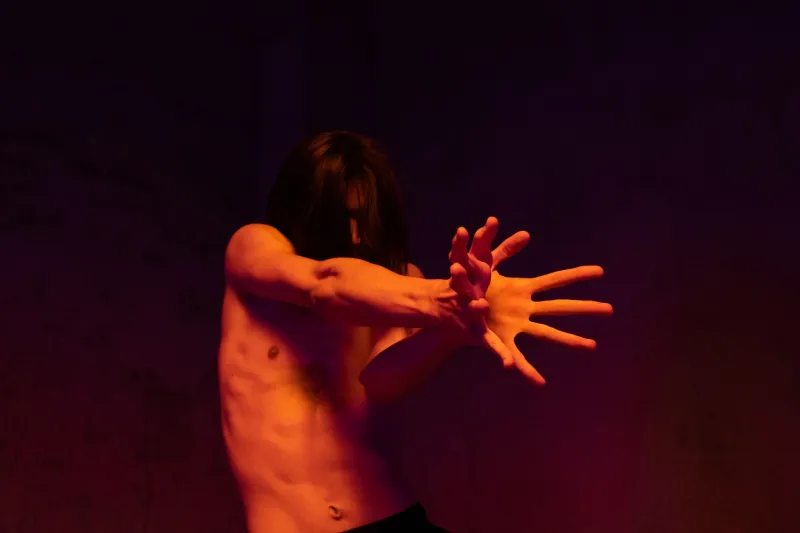
Hand choreography — the deliberate, expressive use of finger and wrist movements within dance — has quietly become one of the most distinctive elements of Shinjuku's live performance and club culture. And it all started somewhere surprisingly humble.
Where the Gesture Began
The V-sign itself has a tangled history. Winston Churchill made it a wartime symbol. American hippies reclaimed it as peace. But in Japan, it landed differently — softer, more playful, almost reflexive. By the 1970s and 80s, it had become a staple of youth culture photography, divorced almost entirely from its political roots.
What happened next is where Shinjuku enters the picture.
As Tokyo's entertainment districts evolved through the bubble economy era of the late 80s, performance culture in Shinjuku began absorbing influences from everywhere — American hip-hop hand signals, traditional Japanese dance gestures called te-odori, and the precise finger choreography of idol group performances. Club performers and backup dancers started incorporating deliberate hand movements not just as accents, but as full vocabulary.
"The hands tell the story when the body can't move," explains Yuki, a choreographer who has worked with several underground performance groups in the Kabukicho area for over a decade. "In a crowded venue, sometimes you're compressed. Your feet aren't free. But your hands are always free."
The V Becomes a Language
By the mid-2000s, specific hand shapes had started carrying meaning within Shinjuku's tighter performance communities. The standard V evolved into variations — palm facing inward versus outward, fingers splayed wide or pressed tight together, the gesture held high above the head versus extended forward toward an audience.
These weren't random. Performers, particularly in the host club and live entertainment circuits that define so much of Shinjuku's nighttime identity, began using hand choreography as a kind of shorthand communication with regular guests. A particular wave of the fingers during a ballad might signal intimacy. A sharp, angular V thrust skyward during an uptempo number became a crowd-call, an invitation to mirror the performer.
That mirroring element is key. Unlike Western concert culture, where the audience largely watches, Shinjuku's entertainment venues have always had an interactive current running through them. Guests are participants. The choreography is partly an instruction.
"When I do this" — Kenji, a dancer who performs regularly at a Shinjuku live venue, demonstrates a slow, deliberate two-finger extension with a slight inward curve — "I'm telling the room to slow down with me. When I flip it fast and push it out, I'm saying wake up. The regulars know. First-timers figure it out by the second song."
Why American Visitors Miss It (And How to Catch Up)
For US visitors, the gap between observer and participant in a Shinjuku venue can feel wide. You're watching something clearly expressive and energetic, but the code isn't immediately readable. That's not a failure — it's an invitation.
Most of the foundational hand gestures in Shinjuku's club and live performance scene can be broken into three categories:
The Call — An open-palmed gesture, fingers together, directed toward the performer or another audience member. It's an acknowledgment, a "I see you and I'm here."
The Mark — The V-sign in its deliberate form, held steady rather than flashed. It signals alignment with the performer's energy. Think of it like raising a lighter at a rock concert, except more conversational.
The Wave — A fluid, wrist-led ripple motion, fingers loose. This one has roots in traditional Japanese fan dance technique and shows up most often during slower, more theatrical numbers.
Learning these doesn't require a dance class, though some Shinjuku venues and cultural experience studios do offer short workshops for tourists. More often, the learning happens organically — by watching, by being in the room long enough for the patterns to surface.
"Don't just stand there with your phone up," Yuki says, laughing. "Put it down for one song. Watch the performers' hands, then watch the regulars. Then try it yourself. Nobody's going to judge you. They're going to love that you tried."
The Gesture as a Bridge
There's something genuinely moving about the idea that a hand gesture — something as small and simple as two raised fingers — can function as a bridge between cultures. Shinjuku's nightlife has always been a place where different worlds compress together: tourists and locals, tradition and modernity, spectacle and sincerity.
When you step into a live venue here and actually engage with the choreography rather than filming it from a distance, something shifts. You stop being an audience member and start being part of the night. The performers notice. The regulars notice. The energy in the room changes in a small but real way.
That's what V Hand Shinjuku is all about — not just watching the stage, but finding your place on it. Even if your place is standing in the crowd with two fingers raised, finally understanding what it means.
Next time you're in Shinjuku, put the camera down for a minute. Let your hands do some talking.