Beyond the Velvet Rope: How Shinjuku's Club Managers Redefined What Hospitality Actually Means
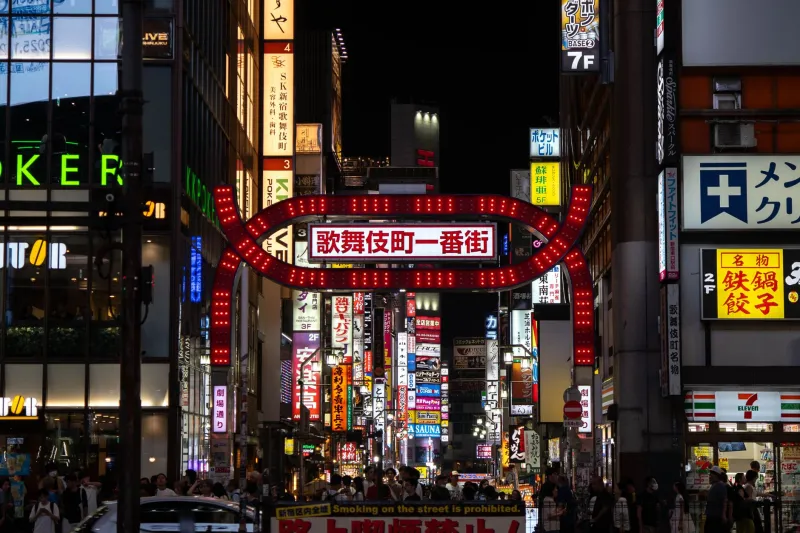
Walk into almost any high-end nightclub in Las Vegas or Miami and you'll get a pretty predictable experience. A host with a clipboard, a practiced smile, maybe a bottle service pitch before you've even found your footing. The whole thing is transactional in a way that feels efficient but rarely feels warm. Now walk into one of Shinjuku's storied entertainment venues on a Friday night, and something shifts almost immediately. The energy is different. The attention is different. And the person managing that room? Operating on a level that most American nightlife professionals haven't even thought to reach for.
We've spent time talking to regulars, international guests, and a few people who work inside Shinjuku's most respected venues, and what we found challenges some deeply held assumptions about what great hospitality actually looks like.
It Starts Before You Even Sit Down
In a lot of American venues, the host's job effectively ends at the door. You get greeted, you get seated, and from that point forward you're largely on your own until a server swings by. Shinjuku's top club managers — particularly in the host clubs and upscale entertainment lounges that define the district's reputation — don't think of hospitality as a hand-off process. They think of it as a continuous read.
These managers are watching. Not in a surveillance kind of way, but in the way a skilled musician listens to a room. They notice when a guest's energy dips, when a table feels like it's losing momentum, when someone new has walked in looking slightly overwhelmed. And they respond — not with a script, but with genuine instinct built from years of paying attention.
That instinct is something you can't train in a weekend onboarding session. It develops over time, shaped by a professional culture in Japan that takes hospitality — omotenashi, as it's often called — seriously as a craft rather than a job function.
Omotenashi vs. "Great Customer Service"
Americans are familiar with the idea of good customer service. We tip for it, we leave Yelp reviews about it, we complain loudly when it's missing. But omotenashi is a fundamentally different philosophy, and understanding the gap between the two helps explain why Shinjuku's best hosts feel so different to interact with.
Customer service, in the Western model, is largely reactive. Someone has a need, you meet it. Someone has a complaint, you resolve it. The interaction is defined by requests and responses.
Omotenashi flips that entirely. The goal is to anticipate what a guest needs before they know they need it — and to do so without making them feel observed or managed. It's hospitality that disappears into the background while simultaneously making everything feel effortless. The best Shinjuku hosts describe it as "removing friction from joy." You're not supposed to notice the effort. You're just supposed to feel good.
For American guests visiting Shinjuku venues for the first time, this often reads as almost magical. Your glass gets refilled before it's empty. The music shifts right when the vibe needed it to. Someone appears at your elbow with exactly the thing you were about to ask for. It feels like the venue is reading your mind — because, in a very real sense, the person running it is.
Exclusivity Without Coldness
Here's where Shinjuku's hospitality philosophy gets genuinely tricky to import back to the States: these venues are often quite exclusive. Entry isn't guaranteed. Not every table is available to every guest. There are hierarchies, regulars, unspoken rules. And yet — almost universally — guests don't walk away feeling rejected or diminished, even when they don't get what they came for.
That's a magic trick American nightlife has largely failed to pull off. Anyone who's been turned away from a club in New York or LA knows the experience can feel arbitrary and humiliating. The door staff wields power in a way that often feels designed to remind you of your place in the pecking order.
Shinjuku's best managers handle exclusivity differently. When something isn't available, the explanation feels genuine rather than dismissive. Alternatives are offered with the same care as the original request. The guest leaves feeling respected rather than ranked. One long-time Shinjuku regular described it this way: "They can tell you no and somehow you still feel like a VIP."
That skill — declining gracefully, redirecting warmly — is arguably the hardest thing to teach in hospitality, and Shinjuku's top hosts have it down cold.
The Memory Game
Regulars at Shinjuku's most beloved venues often report something that sounds almost unbelievable to outsiders: hosts who remember them. Not just their names, but their preferences, their usual drink orders, who they came with last time, what music they responded to. In a district that handles enormous foot traffic, that level of personalized recall is genuinely impressive.
American hospitality leans heavily on technology to solve this problem — CRM systems, loyalty apps, digital profiles. Shinjuku's hosts often do it the old-fashioned way, through genuine attention and a professional culture that treats memory as part of the job. There's something to be said for a system where remembering a guest's favorite whisky is considered a basic professional competency rather than a nice-to-have.
What American Venues Could Actually Steal
None of this is meant to be a takedown of American nightlife — there's plenty happening in cities like Chicago, New Orleans, and New York that's genuinely world-class. But if there are specific lessons Shinjuku's club managers offer, a few stand out.
Slow down the transaction. American hospitality often optimizes for speed. Shinjuku's best hosts optimize for depth of experience. Those aren't always the same thing.
Train for intuition, not just protocol. Checklists have their place, but the hosts who make Shinjuku legendary aren't working from a script. They're reading rooms. That skill can be developed, but it requires investing in people over time rather than cycling through high-turnover staff.
Let the guest feel like the point. In too many American venues, the business model is visible — the upsell, the table minimum, the bottle service push. Shinjuku's top managers make the guest feel like the entire operation exists for their comfort. Even when it doesn't, it feels that way. That's the craft.
Your Stage, Their Setup
At V Hand Shinjuku, we've always believed that the best nights aren't just about the music or the drinks or the crowd — they're about the invisible architecture holding it all together. The host who spots you the moment you walk in. The manager who keeps the energy where it needs to be without you ever noticing the adjustment.
Shinjuku's legendary club managers have spent decades building that architecture. And if American hospitality is paying attention — really paying attention — there's a graduate-level education available in the way these venues run their rooms. You just have to be willing to set aside what you already think you know about what a great host looks like.