Fingers Don't Lie: Decoding the Secret Gesture System Running Shinjuku's Most Exclusive Clubs
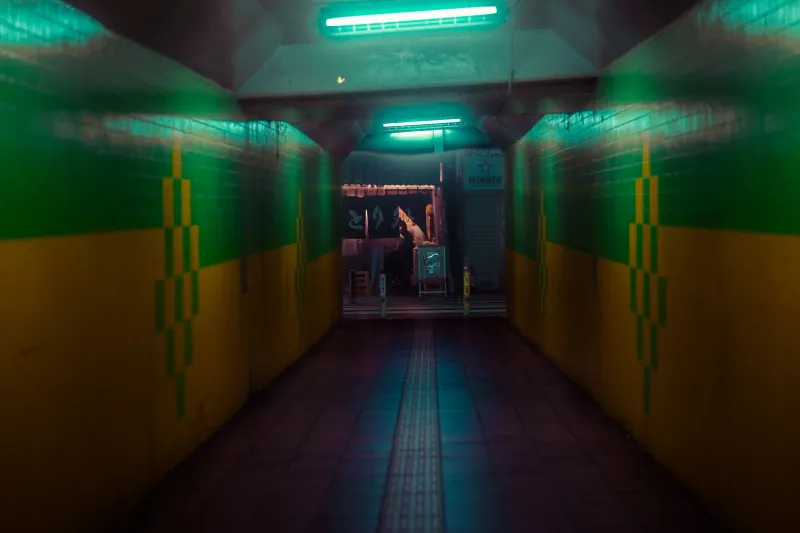
You're standing in a narrow alley somewhere off Kabukicho, waiting behind a velvet rope you almost missed in the dark. A guy in all black near the entrance glances at you, then flicks two fingers toward his collar. Thirty seconds later, you're inside. Your friend — same outfit, same vibe — gets a slow shake of the head and a palm-down wave. They're waiting another ten minutes. What just happened?
Welcome to the unspoken operating system of Shinjuku's underground club scene. It's not magic. It's not random. It's a layered, deliberate communication network built over decades, refined by the people who keep these venues alive night after night.
Why Words Don't Cut It in These Spaces
Think about the average American club. A bouncer leans into a radio, shouts over a headset, maybe waves someone through with a thumb. It's functional, but it's loud, obvious, and honestly kind of kills the vibe. Shinjuku's underground scene operates on a different philosophy entirely.
The music inside some of these venues hits 100+ decibels. The entryways are often barely wider than a doorframe. Radios create noise pollution. And more importantly, exclusivity is part of the product — the moment a club's internal communication becomes visible to everyone in line, the mystique evaporates.
So over time, the people running these spaces developed something tighter. A shorthand. A visual language that moves fast, stays quiet, and keeps outsiders exactly where the venue wants them: curious and slightly off-balance.
The Door Hierarchy: Reading the First Signals
Everything starts at the entrance, and if you know what to look for, you can read a lot from the sidewalk before you ever reach the front.
The first person you typically encounter isn't the decision-maker — they're a relay. Their job is to assess and signal back to whoever's actually controlling the door. Watch for small finger movements near the thigh or waist. A quick two-finger point downward often means "hold them here." A slow open hand facing the ground — palm parallel to the floor — signals "move them along," which in context usually means a polite rejection is coming.
If you see a staff member touch their own chest lightly with a closed fist and then extend two fingers outward, that's typically an escalation signal. Someone with more authority is being flagged. This is actually a good sign if it happens to you — it means you're being considered for entry rather than quietly turned away.
A single index finger pointed upward and rotated in a slow circle? That's the "VIP check" — someone is being flagged for possible upgrade treatment, often because they look like a repeat guest, a known spender, or someone who came with the right company.
Inside the Venue: How the System Keeps Running
Once you're in, the gesture system doesn't stop — it just shifts function. Now it's less about access control and more about crowd management and service coordination.
Bartenders and floor staff communicate constantly without ever shouting across the room. A crossed-wrist signal near the bar (think a quick X made with both forearms) means a section is at capacity — no more guests should be directed there. A single hand raised with fingers spread and then slowly closed means "slow down service" to a specific area, often used when a group is getting too rowdy or when a VIP table needs a moment to reset.
Promoters — the ones circulating through the crowd rather than standing at fixed posts — use a different subset of signals entirely. If you see someone touch the outside of their ear and then point subtly toward a corner of the room, they're flagging a situation that needs attention. Not necessarily a problem, but something worth monitoring. It might be a guest who looks unwell, a group getting too loud, or a photographer who's overstayed their welcome in a restricted area.
What This Means for American Visitors
Here's the practical takeaway if you're hitting Shinjuku's underground scene for the first time: you probably won't crack the full code, and honestly, you don't need to. But knowing that this system exists changes how you carry yourself.
First, slow down at the entrance. Don't rush the door. The people working it are reading you before you even open your mouth, and the signals flying around you are part of that read. Standing calmly, making brief eye contact, and not visibly scanning the room for someone to argue with goes a long way.
Second, if you get a hold signal — even if you don't consciously recognize it as one — don't push. The second you start pressing a bouncer who's clearly waiting on a relay from inside, you've already lost the interaction. Patience reads as confidence in this context.
Third, if you're with a group, designate one person to handle the entry conversation. Multiple people talking at once creates noise in a system that's built around clarity. One calm spokesperson, one clear ask.
The Cultural Layer You Can't Skip
It's worth noting that this gesture system didn't appear out of nowhere. Japanese communication culture has always placed enormous value on non-verbal cues — the concept of kuuki wo yomu (reading the air) runs deep. In a setting like a Shinjuku underground club, where the entire atmosphere is carefully curated and the staff are professionals who've spent years in these spaces, that cultural tendency gets amplified and formalized.
For American visitors used to more direct, verbal communication styles, this can feel opaque at first. But once you start seeing it as a feature rather than a barrier, the whole experience shifts. You're not being excluded from the conversation — you're being invited to pay closer attention.
And honestly? That's kind of the whole point of being here.
Your Stage, Their Rules
Shinjuku's underground venues are some of the most carefully run entertainment spaces on the planet. The gesture systems their staff use aren't just logistical tools — they're part of the atmosphere, part of the craft. When everything runs smoothly and the night feels seamless, there's a whole invisible infrastructure behind that feeling.
Now you know a little more of what it looks like. Use that knowledge well — be a good guest, read the room, and let the night do what Shinjuku nights do best.
Your stage awaits. You just have to earn it.