First Show in Tokyo: What Nobody Tells American Musicians Before They Hit a Shinjuku Stage
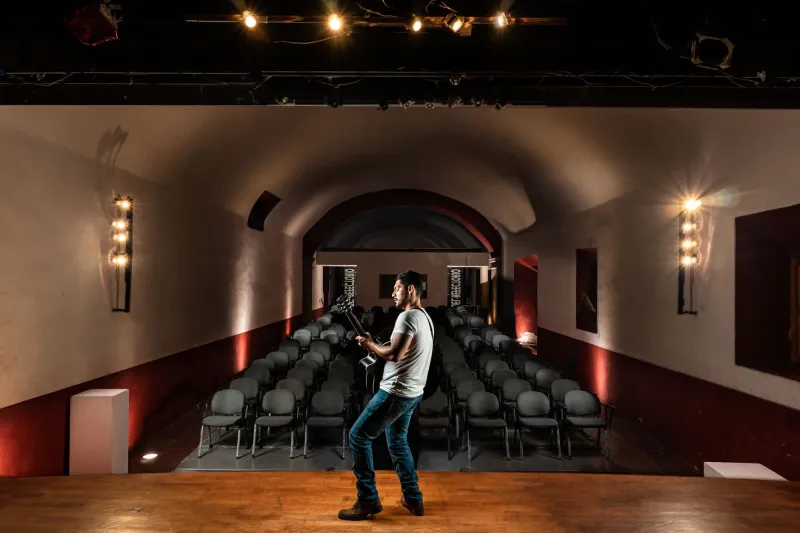
There's a particular kind of silence that falls over a Shinjuku venue during soundcheck. Not the dead, awkward silence of a half-empty American club at 4 PM. Something more deliberate. The staff moves efficiently around your gear. The house engineer watches you without expression. And somewhere in the back of your head, a voice starts whispering: this is different.
It is different. And the musicians who do their homework before landing at Narita are the ones who walk offstage feeling like they owned the night — not the ones who spend the whole set trying to catch up.
We talked to American artists who've performed across Shinjuku's live music circuit — from the intimate basement rooms off Kabukicho to the mid-capacity spots tucked into Golden Gai's orbit — and asked them to be honest about the prep work that actually mattered. This is what they said.
The Gear Conversation Starts Before You Pack
Most US musicians assume they can sort out equipment details when they arrive. That assumption has burned more than a few people.
Japan runs on 100V power, not the 110-120V standard you're used to back home. Most modern touring gear handles that gap fine, but older analog equipment — certain tube amps, vintage keyboards, specific pedal boards — can behave unpredictably or run hotter than expected. Before anything else, audit every piece of gear you're bringing and verify its voltage tolerance.
Beyond power, talk to the venue directly about what's already in the room. Shinjuku venues tend to be well-equipped by global standards, but "well-equipped" means something specific here. The house PA might be a Japanese-market system you've never touched. The stage monitors could be positioned differently than what you're used to. Drum kits provided by the venue often have slightly different configurations than American rental kits.
The artists who arrive with a detailed tech rider — translated into Japanese, or at minimum formatted clearly enough that a non-native English speaker can parse it — get what they need. The ones who show up and explain it verbally on the day often don't.
Soundcheck Is Not Optional. It's Sacred.
In the US, it's pretty common to see soundchecks treated as suggestions. You roll in late, run through half a song, shrug, and trust that the engineer will figure it out. Some American venues have normalized that energy.
Shinjuku hasn't.
The soundcheck in a Japanese live house is a structured, professional event. The engineer has a schedule. The crew has a sequence. Showing up on time isn't just courteous — it signals that you understand how the evening is supposed to run. Showing up late, or treating the check casually, reads as disrespectful in a way that can color your entire relationship with the venue staff before you play a single note.
Use the full time you're given. Run your actual set opener, not just a quick riff. Dial in your monitor mix carefully, because Japanese sound engineers tend to be precise and will give you exactly what you ask for — but they're not going to guess what you want. Communicate specifically. "More of my voice in the floor monitor" lands better than vague gestures and hopeful looks.
Also: bring a Japanese-speaking contact if you can. A lot of Shinjuku venues have engineers with conversational English, but technical audio vocabulary doesn't always translate cleanly under pressure. Having someone who can bridge that gap during soundcheck is a genuine advantage.
Understanding the Room Before the Crowd Arrives
Shinjuku stages are, on average, more compact than comparable American venues. A room that holds 200 people might have a performance area that feels tight to a four-piece band used to spreading out across a wide US club stage. This isn't a flaw — it's a feature. The proximity creates a kind of energy that's hard to replicate in bigger spaces. But you need to choreograph yourself accordingly.
Walk the stage before doors open. Figure out where your natural movement range ends before it becomes someone else's equipment. If you're a performer who moves a lot, identify your boundaries early. If you use in-ear monitors, test them at the edges of the stage, not just center. Acoustic dead spots exist in every room, and finding them during soundcheck beats discovering them mid-song.
Also worth noting: sight lines in Shinjuku venues are often different from American clubs. The audience can frequently see you from angles that a wider, shallower US stage wouldn't expose. Your whole presence is visible in a way that rewards intentionality. The performers who treat the compact stage as an intimate conversation rather than a limitation tend to connect harder.
The Mental Prep That Actually Matters
Here's the part that doesn't show up in any technical rider: Japanese audiences engage differently.
If you're used to American crowds that signal approval loudly and constantly — cheering between verses, calling out, talking back to the performer — a Shinjuku audience might initially feel unreadable. They're not cold. They're not bored. They're paying attention with an intensity that's almost physical. The applause comes, and when it does, it's genuine and earned.
American musicians who've had their best Tokyo nights describe learning to perform into that attention rather than trying to generate noise from the crowd. You stop fishing for reaction and start trusting the room. It shifts something in how you play.
One guitarist who's done multiple Shinjuku runs put it plainly: "Back home I'm always kind of performing at the audience. Here I felt like I was performing with them, even when they were quiet. It changed how I thought about what a show actually is."
That mental recalibration — releasing the need for constant external feedback and trusting your performance to land — is something worth practicing before you get on a plane. Meditate on it. Talk to musicians who've done it. Go in expecting a different kind of connection, not a lesser one.
The Night Before Is Part of the Prep
Shinjuku will absolutely tempt you the night before your show. The city doesn't sleep, the bars are incredible, and the energy of the neighborhood at midnight is genuinely hard to walk away from. Nobody's going to tell you to stay in your hotel room.
But the musicians who perform well here treat the pre-show evening with some discipline. Eat something real. Drink water. Explore the neighborhood on foot so you're not wired from transit stress the next morning. Walk past your venue if you can — just to see it in context, to feel less like a stranger when you walk in for soundcheck.
Shinjuku rewards preparation. It also rewards presence. The best shows on this circuit happen when an American artist arrives knowing the technical landscape, respects the professional culture of the room, and then lets go of everything else and just plays.
Your stage is waiting. Do the work to deserve it.