Why American Producers Keep Booking Flights to Shinjuku Instead of Studio City
There's a running joke among a certain crew of Los Angeles beat-makers that the best thing to happen to their careers wasn't a major-label deal or a viral single — it was a one-way ticket to Tokyo. Specifically, Shinjuku. Specifically, the kind of venues and studios tucked behind izakayas and beneath karaoke floors that don't show up on any tourist map.
Shinjuku has always had a reputation for nightlife. The neon, the crowds, the Golden Gai alleyways — that part's well documented. But what's been quietly building underneath all of it is something a lot more interesting to a specific kind of creative: a recording and performance culture so distinct from anything in the US that producers, engineers, and songwriters are now treating it less like a vacation and more like a residency.
The Room Sounds Different Here
Ask any producer worth their DAW subscription what matters most in a studio, and they'll eventually get around to the room. Acoustics aren't glamorous, but they're everything. And Shinjuku's recording spaces — many of them carved out of older commercial buildings, retrofitted in ways that defy conventional studio logic — have a sonic character that engineers describe as genuinely hard to replicate.
Part of it is the construction. Older concrete-and-tile interiors create natural reverb profiles that American studios spend thousands trying to simulate with plugins. Part of it is the obsessive attention to detail that Japanese audio culture is known for. Walk into a mid-level Shinjuku studio and you'll find vintage outboard gear maintained to a standard that would make a Nashville engineer weep — not because it's pristine and untouched, but because it's been actively used, serviced, and understood by people who treat equipment like instruments.
American producers used to rooms wired for efficiency — fast sessions, fast turnarounds, everything optimized for output — often describe Shinjuku studios as the first places they've worked where slowing down actually felt productive. The rooms invite a different kind of listening.
Gear Culture as Creative Culture
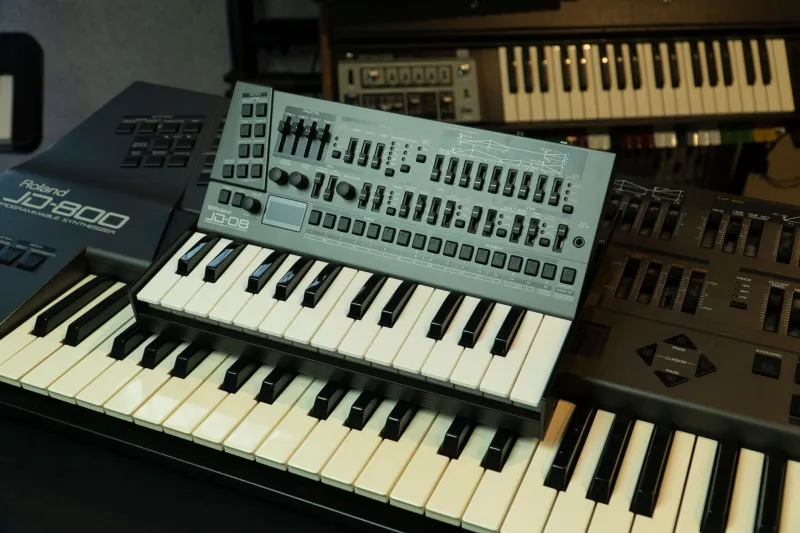
Japanese audio gear culture is its own rabbit hole, and Shinjuku sits right at the center of it. The neighborhood has long been home to some of Tokyo's best vintage electronics dealers, and that proximity has shaped what local producers and engineers collect, use, and care about. You'll find analog synthesizers from the '70s and '80s — many of them manufactured in Japan and never widely exported — sitting next to modern hybrid setups in ways that feel less like museum displays and more like working arsenals.
For American producers raised on software-first workflows, this is sometimes a genuine culture shock. Sessions here often start with a conversation about the hardware. What does the room have? What does it do well? The gear shapes the music rather than the other way around, and producers who come in expecting to just run their usual template often find themselves rethinking the whole approach.
That friction, it turns out, is exactly what a lot of them came for.
Collaboration Without the Ego Math
One of the less-discussed reasons American producers keep returning to Shinjuku is something harder to quantify than acoustics or equipment — it's the collaborative atmosphere. US studio culture, especially at the higher levels, can be intensely hierarchical. Credits matter. Percentages matter. Who gets the production tag matters. Sessions can feel like negotiations before they feel like music-making.
Shinjuku's underground music scene runs on different social logic. Venues that double as performance spaces and informal recording environments have cultivated a culture where showing up, contributing, and letting the music lead tends to take priority over positioning. American producers describe sessions here as some of the most genuinely collaborative work they've done — not because the business side disappears, but because it enters the room later.
There's also the language dimension. Working across a language barrier forces a kind of musical communication that strips away a lot of the verbal noise that can clog up creative sessions. When you can't easily talk about what you want, you have to play it, hum it, build it. Several producers have noted that their most adventurous work came out of sessions where they shared almost no common language with their collaborators.
The Venue Circuit as Creative Pipeline
Shinjuku's live venues are doing something that goes beyond just hosting performances. The best of them function as informal creative networks — places where a producer visiting from Chicago might end up in a late-night session with a Japanese composer, a Korean vocalist passing through, and a local drummer who's been playing the same basement stage for fifteen years.
These collisions don't happen by accident. They happen because the venues cultivate them. Bookers who know their regulars make introductions. Bar staff who've been around long enough to know who's in town on any given night facilitate connections that would never happen through official channels. It's a system that runs on trust and familiarity, and the American producers who've cracked it tend to talk about it like they've found something most people don't know exists.
For anyone who's spent time trying to network their way through LA or New York's music scenes — where access is gatekept and introductions are currency — the relative openness of Shinjuku's underground can feel almost disorienting.
What They're Bringing Home
The influence is starting to show up in the music. Producers who've spent serious time in Shinjuku often return with a different relationship to space and silence in their arrangements — a willingness to let sounds breathe, to leave gaps, to trust that less can carry more weight. There's a textural sensibility that Japanese music production has refined over decades that's quietly infiltrating American records without most listeners knowing where it came from.
There's also a renewed interest in analog process and imperfection. The Shinjuku studio experience has a way of reminding producers that the pursuit of a cleaner, more controlled sound isn't always the pursuit of a better one.
None of this is to say that Shinjuku is some kind of creative paradise untouched by commercial pressure or industry dynamics. It has those things too. But for American producers looking for a reset — a place where their habits get challenged, their ears get recalibrated, and their best ideas come from rooms they never expected to be in — it keeps delivering.
The flights aren't getting any cheaper. They keep booking them anyway.