Westerners on the Mic: How American Artists Found Their Groove in Shinjuku's Live Music Underground
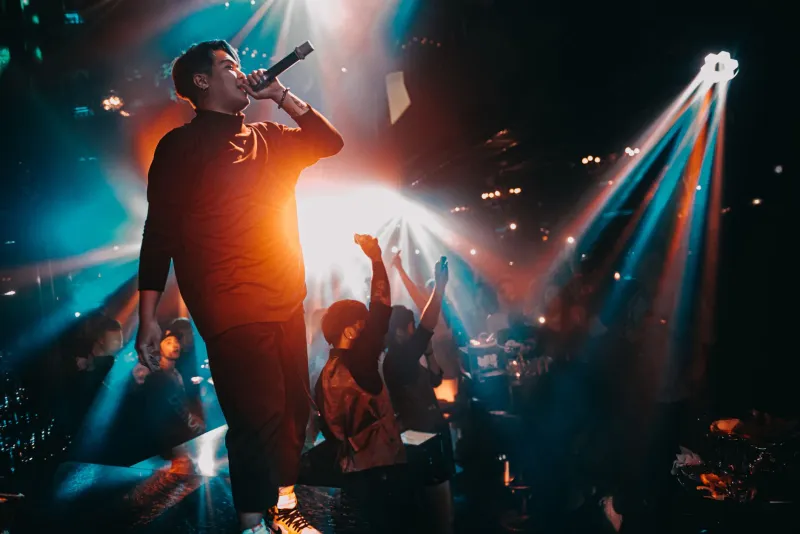
There's a moment that a lot of American musicians describe the same way — the first time they walked into a Shinjuku venue as a performer rather than a tourist. The stage is smaller than anything back home. The crowd is quieter at first, more observant. And then something clicks, the music lands, and the room transforms into something you didn't expect. That's the hook. And for a surprisingly large number of US-born artists, it's the reason they never booked a return flight.
Shinjuku's live music ecosystem is dense, layered, and deeply competitive. You've got everything from polished jazz lounges tucked behind izakayas to underground techno rooms that don't even have signs out front. What's changed over the last decade is who's showing up to fill those stages — and how they're changing the sound of the neighborhood in the process.
Landing in Tokyo With a Guitar and a Prayer
Marcus D., a soul and R&B vocalist originally from Atlanta, came to Tokyo on a teaching gig eight years ago. He'd been playing small venues in the American South for years, doing the weekend warrior thing, but nothing had ever really stuck. Within three months of arriving in Shinjuku, he'd landed a weekly residency at a bar in Kabukicho that seated maybe forty people.
"Back in Atlanta, forty people felt like a failure," he laughs. "Here, it felt like everything. The audience was present in a way I hadn't experienced before. No one was on their phone. No one was shouting over me. They were actually listening."
That attentiveness is something almost every American performer in Shinjuku mentions. Japanese audiences tend to engage differently than Western crowds — less spontaneous noise, more concentrated focus. For some artists, it's an adjustment. For others, it's the most creatively freeing environment they've ever performed in.
The Collaboration Factor
What's made Shinjuku particularly fertile ground for American artists isn't just the venues — it's what happens when Western and Japanese musical sensibilities start to overlap. The city has a long tradition of absorbing outside influences and mutating them into something distinctly its own. American jazz, hip-hop, and electronic music all have deep roots in Tokyo's nightlife culture, which means incoming artists aren't arriving to a blank slate. They're stepping into a conversation that's already been going on for decades.
DJ and producer Leila Ramos, originally from Los Angeles, has spent the last five years building a career in Shinjuku's electronic underground. She describes her sets as a constant negotiation between the sounds she grew up with and what she's absorbed from her Japanese collaborators.
"I'll be working on a track with a producer from Shinjuku, and he'll pull in something from city pop or ambient Japanese electronic music that I never would have reached for on my own. And I'll bring in some deep house or Detroit techno textures that shift the whole direction. The stuff that comes out of those sessions doesn't sound like either of us individually. It sounds like here."
That hybrid quality is increasingly what draws both local and international crowds to Shinjuku's more adventurous venues. Audiences aren't just looking for authentic American music or traditional Japanese sounds — they want the collision. They want to hear what happens when those worlds actually touch.
The Business of Belonging
Building a sustainable career in Shinjuku's entertainment landscape isn't without its friction. Language barriers are the obvious challenge, but American performers often cite subtler obstacles — understanding unwritten venue etiquette, navigating booking relationships that operate on trust built slowly over time, and learning how to read a crowd that won't always tell you directly what it thinks.
"You have to earn your place here in a way that feels different from back home," says Marcus. "Nobody's going to hype you up just because you showed up with talent. You have to be consistent, respectful, and patient. Once you've demonstrated that, doors open that you didn't even know existed."
For Leila, the key was investing in community before chasing bookings. She started attending local DJ nights as an audience member, connecting with other artists, and showing genuine interest in the scene rather than just trying to insert herself into it. That approach paid off. Her first major booking in Shinjuku came through a Japanese producer she'd met at a record shop, not through any formal pitch or agency.
What Shinjuku Offers That Nowhere Else Does
Ask any American artist why they stay, and the answers are surprisingly consistent. The city takes music seriously in a structural way that's hard to find in the US. Venues invest in sound systems. Audiences invest their attention. There's a level of craft-consciousness that runs through the entire ecosystem, from the people booking the shows to the bartenders who know when to turn the ambient noise down because something special is happening on stage.
Shinjuku specifically offers a kind of creative density that's hard to replicate. Within a few blocks, you can move from a jazz bar doing bebop standards to a venue hosting an experimental noise set to a club where a DJ is weaving together trap, J-pop remixes, and ambient techno. For artists who came up in cities where scenes tend to be siloed, that cross-pollination is intoxicating.
"I feel like I've learned more about music in five years here than in the fifteen years before I arrived," Leila says. "Shinjuku doesn't let you get comfortable. There's always something happening that challenges what you think you know."
The Stage Is Still Open
The American presence in Shinjuku's live music scene isn't a trend that's peaked — if anything, it's still gaining momentum. More artists are making the move, drawn by word of mouth from performers who've already built lives here. Social media has made the community more visible, and venues are increasingly open to booking international talent as a draw for both expat regulars and curious Japanese audiences.
What's emerging in Shinjuku is something genuinely new — a musical culture that doesn't belong entirely to either country, shaped by the friction and fusion of artists who decided to show up, stay, and figure it out. The stage is smaller than you might expect. The crowd is quieter at first. And then the music lands, and the room becomes something else entirely.
That's the Shinjuku effect. Once you've felt it from the stage, it's pretty hard to walk away.