Adopted by the Underground: The Americans Who Never Really Left Shinjuku
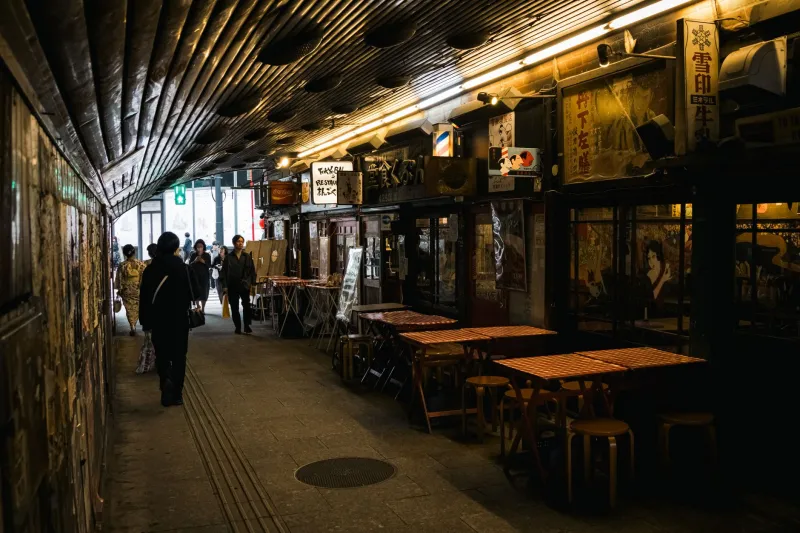
There's a particular kind of magic that happens when a place stops feeling like a destination and starts feeling like yours. For a growing number of Americans — expats, frequent flyers, and people who just kept booking return tickets — Shinjuku's underground music and nightlife scene has become exactly that: a second home, earned one late night at a time.
These aren't people who stumbled through Golden Gai on a group tour and called it authentic. These are regulars. The ones the bartenders recognize before they reach the counter. The ones who know which venue switches genres after midnight and which basement jazz spot only really gets going around 1 a.m. Their stories are different, but the throughline is the same — Shinjuku got under their skin and never really let go.
From Tourist to Fixture: How It Actually Happens
Ask any American who's made the transition from visitor to regular and they'll tell you it wasn't a decision so much as a slow drift. Marcus, a graphic designer from Portland who's been splitting his time between Oregon and Tokyo for the past four years, describes his first real night in Shinjuku's live circuit as "completely disorienting in the best possible way."
"I walked into this tiny venue — maybe forty people max — and there was a jazz trio doing things I'd never heard live before," he says. "Not fusion, not jazz-adjacent. Just genuinely adventurous playing. I stayed for three sets. Bought a round for the table next to me because I didn't know what else to do with the feeling."
That round turned into a conversation. That conversation turned into an introduction to a local musician. That introduction eventually led Marcus to a network of performers, venue staff, and fellow music obsessives who now form the backbone of his Tokyo social life. He's not unusual. This is, more or less, how it tends to go.
Shinjuku's underground scene has a gravitational pull that's hard to explain until you've felt it. The venues are small enough that faces become familiar fast. The music is serious without being precious. And the culture of the rooms — respectful, attentive, genuinely invested in the performance — creates an atmosphere that rewards people who show up with the right energy.
Learning the Unwritten Rules
Becoming a real regular anywhere in Tokyo requires navigating a set of social codes that aren't written down anywhere. Shinjuku's music venues are no exception. For Americans used to a more expressive, talk-through-the-set bar culture, the adjustment can take a minute.
Jenna, a Nashville-based music teacher who visits Tokyo two or three times a year and has been doing so since 2019, remembers her early missteps with a laugh. "I clapped at the wrong time twice in one night during my first visit to this tiny blues spot near Kabukicho. Nobody said anything, but I could feel the temperature in the room drop a little."
She went back the next night anyway. And the night after that. By her third visit to Tokyo, the venue's owner — a compact, soft-spoken man who goes by Kenji-san — started waving her in before she'd even finished bowing at the entrance. "That was the moment I realized I'd crossed some invisible line," she says. "I wasn't a tourist anymore. I was just... someone who came here."
That kind of acceptance is quietly earned in Shinjuku. It's not about speaking perfect Japanese or having the right credentials. It's about consistency, respect, and a demonstrated willingness to engage with the scene on its own terms rather than expecting it to perform for you.
What Keeps Them Coming Back
The obvious answer is the music. Shinjuku's live circuit punches well above its weight for a neighborhood that most international visitors associate primarily with neon and noise. On any given weekend, you can move between experimental electronic sets, traditional shamisen performances with a modern edge, hard bop jazz that would hold its own in any Brooklyn basement, and original J-rock that hasn't been softened for mainstream consumption.
But the Americans who've become genuine fixtures will tell you it's more than the programming. It's the density of it. The fact that world-class nights out are stacked on top of each other in a few square blocks. The way the city takes nightlife seriously as a craft rather than just a revenue stream.
Derek, a software engineer from Austin who relocated to Tokyo three years ago for work and has shown no signs of planning a return, puts it bluntly: "In Austin, going out is fun. In Shinjuku, going out feels like it matters. I don't know how else to say it. The people who run these venues care. The musicians care. Even the regulars care. That energy is addictive."
Derek now helps translate set lists for a small venue that hosts international acts and has become an informal cultural bridge between visiting American performers and local audiences. It's a role that evolved organically — nobody asked him to do it, he just started doing it — and it's become one of the things he's most proud of in his Tokyo life.
Holding Onto American Identity While Going Local
One of the more interesting tensions in the lives of Shinjuku's American regulars is the question of identity. How much do you adapt? How much do you hold onto?
Most of the people in this scene have landed somewhere comfortable in the middle. They've absorbed enough of the local culture to move through it fluently — the pacing, the etiquette, the unspoken hierarchies — while remaining distinctly, unapologetically themselves. Their Americanness isn't something they hide or perform. It's just part of who they are in the room.
Jenna describes it as "being a guest who knows where the extra towels are." You're not pretending to live there. You're not treating it like a theme park. You're just someone who has a real relationship with the place and the people in it.
That authenticity, interestingly, tends to be exactly what earns respect in Shinjuku's tighter-knit venues. Nobody wants a foreigner who's overcompensating. They want someone who's genuinely curious, genuinely present, and willing to be a little uncomfortable in service of a real connection.
Your Turn to Start the Drift
The regulars will be the first to tell you there's no shortcut. You can't manufacture the slow accumulation of nights, familiar faces, and shared experiences that turns a venue into a second home. But you can start.
Show up. Stay for the full set. Learn one bartender's name. Go back the following week. Let the music do the work it's designed to do.
Shinjuku has a way of meeting people halfway when they show up with the right intention. The underground is deeper than it looks from the street, and the people already inside — American and Japanese alike — have generally been pretty willing to make room.
The only real requirement is that you take it seriously. In a scene built on craft and consistency, that's the only currency that actually matters.