Dressed in the Sign: How Shinjuku's V-Hand Went From Nightlife Code to Global Fashion Currency
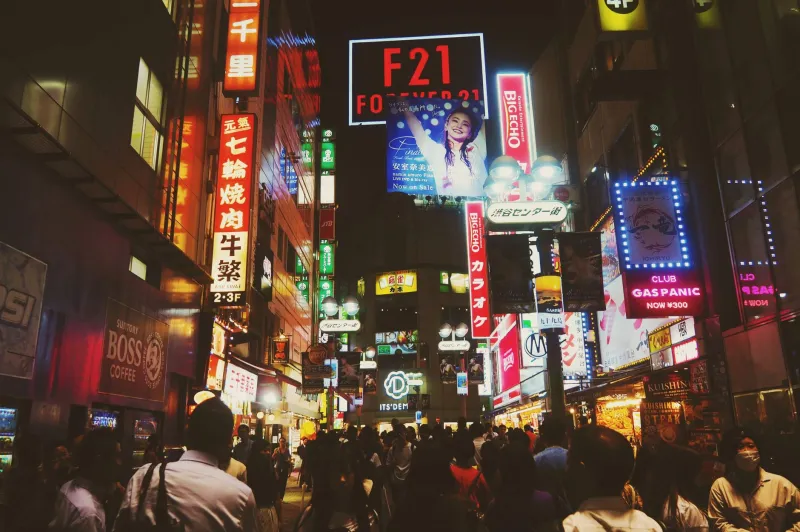
There's a photo floating around fashion Twitter right now. A model in a structured Issey Miyake-adjacent coat, standing under the red lanterns of Kabukicho, two fingers raised beside her cheekbone. The caption says nothing. It doesn't have to. If you know Shinjuku, you already know what that hand means.
Except, maybe you don't. And that's exactly the tension at the heart of one of Tokyo's most unexpected style conversations.
From Signal to Symbol
The V-hand gesture has deep roots in Shinjuku's entertainment underground. For years it functioned as a kind of social currency—a way to signal familiarity with certain venues, certain crowds, certain unspoken rules of the night. It wasn't decorative. It was functional. You either knew what it meant or you didn't, and that gap was kind of the point.
Somewhere between 2019 and now, that changed.
"I started noticing it in lookbooks before I ever saw it used correctly inside a club," says Yuki Tanaka, a Shinjuku-based accessories designer whose work often references street-level Tokyo subcultures. "That felt strange to me. Like seeing a band's logo on a shirt worn by someone who's never heard a single song."
For Tanaka, the visual migration of the gesture into mainstream fashion isn't inherently offensive—it's just incomplete. "The sign has weight. When it gets flattened into an aesthetic, that weight disappears. What's left is just a pose."
The Influencer Accelerant
American content creators have played an undeniable role in amplifying the V-hand's visual reach. Travel influencers shooting Tokyo itinerary content, fashion bloggers doing "Tokyo street style" roundups, lifestyle accounts building "Japan aesthetic" highlight reels—the gesture appears in all of it, usually stripped of context and reframed as a kind of cool-girl shorthand for being somewhere interesting.
Los Angeles-based fashion blogger Maya Chen, who has documented multiple trips to Shinjuku for her 400K-strong following, is surprisingly self-aware about this dynamic. "I'll be honest—the first time I threw up the V in a photo here, I thought I was just doing the peace sign thing," she admits. "It wasn't until a local told me there was more to it that I started actually researching. Now I try to explain the context in my captions. Most of my audience doesn't know and genuinely wants to learn."
That willingness to dig deeper isn't universal, though. For every creator who leans into the education, there are ten who treat the gesture as pure decoration—another exotic visual element to collect alongside matcha lattes and capsule hotel selfies.
What Tokyo Designers Are Doing With It
Interestingly, some Japanese designers have leaned into the aesthetic evolution rather than resisting it. A small Shimokitazawa-based streetwear label called Tetsudo released a limited capsule last spring built entirely around hand gesture iconography, with the V-hand rendered in embroidered patches, screen prints, and woven labels. The collection sold out in four days.
"We weren't trying to protect the gesture or commodify it," says the label's creative director, who goes by Ren. "We were trying to document a moment. Fashion does that. It takes something alive and makes it permanent. Whether that's good or bad depends on what you do with the permanence."
The collection's campaign imagery was deliberately shot inside actual Shinjuku venues—dark booths, bar counters, stage wings—grounding the visual language back in its original environment even as the garments themselves traveled far beyond it.
The Photography Dimension
Beyond fashion specifically, the V-hand has become a recurring motif in a certain strand of Tokyo street photography. Film photographers, in particular, have latched onto it as a compositional anchor—the raised fingers cutting against neon reflections, rain-slicked pavement, or the blurred motion of a crowded crossing.
Some of the most-shared images in Tokyo photography communities on Reddit and Tumblr feature the gesture prominently, often photographed in ways that feel genuinely reverent rather than extractive. The best of these images understand that the hand isn't the subject—the context surrounding it is.
"A gesture means nothing in isolation," says Kenji Mori, a documentary photographer who has spent three years shooting Shinjuku's nightlife scene. "The interesting photograph is the one where you see the hand and you see the room responding to it. That's when you understand what it actually is."
Appropriation or Evolution?
The honest answer is: probably both, depending on who's holding the camera and who's wearing the patch.
Cultural symbols don't stay still. They migrate, mutate, and pick up new meanings as they travel. The V-hand's journey from underground signal to fashion motif isn't unique in that sense—it's the same arc that subcultural codes have always followed when they intersect with mainstream visibility.
What's worth paying attention to is whether that migration happens with any acknowledgment of origin. Tanaka puts it plainly: "I don't need every American tourist to pass a test before they can wear a jacket. I just want them to know there's a test that exists. That the thing they're wearing means something beyond looking cool."
For visitors heading to Shinjuku—especially those planning to document their experience for an audience back home—that's probably the most useful takeaway. The V-hand looks good in photos. It looks even better when you understand what you're holding.