Three Days, One District: The Shinjuku Playbook American Tourists Never Get Handed
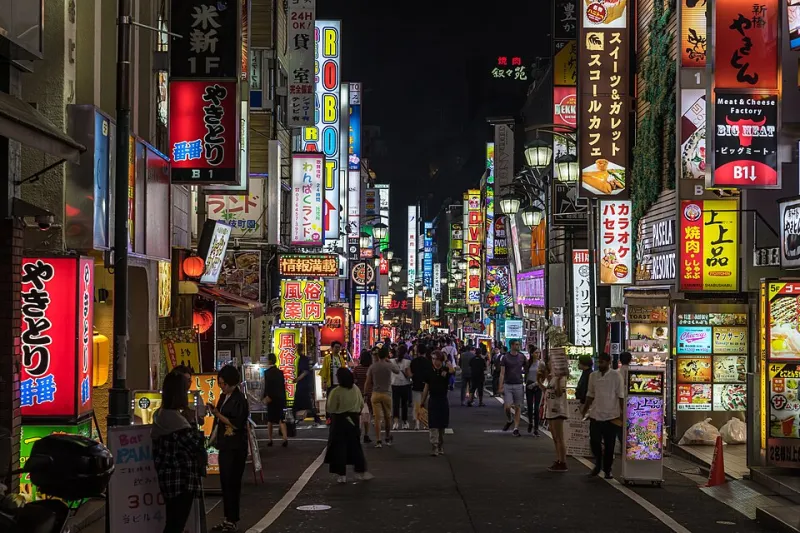
Photo: Basile Morin, CC BY-SA 4.0, via Wikimedia Commons
Let's be real for a second. You've booked the flight, you've watched the YouTube videos, and you've got a list of places saved to your Google Maps that looks suspiciously like every other American's Google Maps. Kabukicho. Golden Gai. The robot restaurant — which, for the record, closed years ago, so delete that one immediately.
Shinjuku doesn't reward checklist travelers. It rewards people who slow down, pay attention, and let the district teach them something. Seventy-two hours is enough time to do exactly that — if you structure them right.
Here's the playbook nobody hands you at the airport.
Day One: Get Spatially Literate Before You Do Anything Else
Your first instinct on landing is going to be to go. Resist it. Shinjuku Station alone has over 200 exits. That's not a metaphor — there are literally more than 200 ways to leave the building. Spend your first morning figuring out which ones matter to you.
East Exit drops you into commercial Shinjuku — the big department stores, the crowds, the energy that makes first-timers feel like they've walked onto a film set. South Exit connects you to Takashimaya Times Square and eventually bleeds into the quieter residential pockets toward Sendagaya. West Exit is business Shinjuku, all glass towers and salaryman foot traffic, but keep walking and you hit Omoide Yokocho — Memory Lane — where tiny yakitori stalls have been operating since the postwar era.
Don't try to experience all of this on day one. Just walk it. Get your bearings. Notice how the vibe shifts block by block. The gap between Kabukicho's neon chaos and the narrow, almost residential calm of Golden Gai is about four minutes on foot. That transition tells you more about Shinjuku's character than any travel blog ever could.
Save your first evening for somewhere low-stakes and observation-friendly. A counter seat at a standing bar near East Exit. Somewhere you can watch how the neighborhood moves after dark without being in the middle of it.
Day Two: Time Your Moves Like a Local
Locals aren't operating on a tourist's schedule. Shinjuku's rhythms are specific, and once you understand them, everything gets easier.
Morning belongs to commuters and shop workers. The convenience stores are stocked, the coffee is fresh, and the streets have a purposeful, unhurried quality that's completely different from the evening chaos. This is the best time to explore the areas you identified on day one — Golden Gai before noon looks completely different from Golden Gai at midnight, and both versions are worth seeing.
Afternoon is transition time. Shops open properly. The lunch crowd at ramen counters peaks around noon and clears by 1:30. If you want to eat somewhere good without waiting, show up at 11:45 or 2:00. Not 12:30. Never 12:30.
Evening starts earlier than you think. The first wave of after-work energy hits Shinjuku around 6:00 PM. The hostess bars, the izakayas, the standing cocktail spots — they all get their first real crowd before most Americans have even thought about dinner. If you want to feel the district at full capacity without the late-night intensity, 7:00 to 9:00 PM is the sweet spot.
Tonight's mission: pick one neighborhood and go deep instead of wide. Kabukicho is the obvious choice, but consider spending your second evening in the 2-chome area — Shinjuku's LGBTQ+ district, which runs on a completely different energy and offers some of the most genuinely welcoming bar experiences in Tokyo for first-time visitors.
Day Three: Stop Performing Tourism
By day three, something starts to shift if you've been paying attention. You know which exit you need. You've figured out that the vending machine near your hotel has cold canned coffee that's actually good. You've stopped taking photos of everything and started just being somewhere.
This is when Shinjuku opens up.
Spend your third morning in Shinjuku Gyoen — the massive national garden that sits in deliberate contrast to everything else the district is doing. It's not a hidden gem; everyone knows about it. But it functions differently on a Tuesday morning than it does on a weekend, and by day three you have enough context to appreciate what you're looking at.
For your final evening, make a decision and commit to it. Don't hedge. Pick one venue — a live music room, a cocktail bar, a jazz spot — and stay there long enough to actually become a regular for a night. Talk to the bartender if you can. Order whatever they recommend. Let the evening go where it goes.
The tourists who leave Shinjuku feeling like they got it aren't the ones who covered the most ground. They're the ones who stopped trying to consume the district and let it consume them instead.
The One Rule That Covers Everything
If you take nothing else from this: Shinjuku rewards presence over productivity. The Americans who come back — and they always come back — aren't the ones who hit the most spots. They're the ones who understood that this district doesn't give up its best moments to people in a hurry.
Slow down. Pay attention. Let the 72 hours work.
Your stage is already set. You just have to show up for it.