Why Emerging Musicians Are Skipping LA and Booking One-Ways to Tokyo Instead
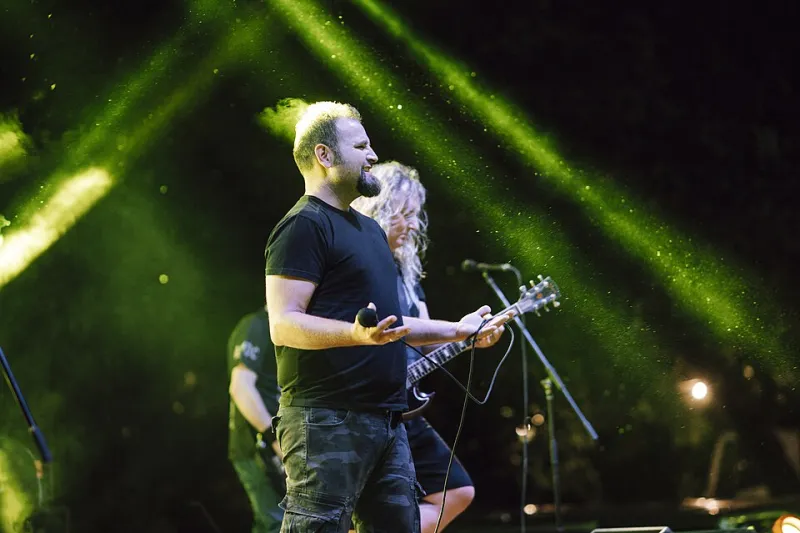
Photo: Shixart1985, CC BY 2.0, via Wikimedia Commons
Something quiet has been happening in Shinjuku's live music rooms for the past several years, and the American music industry — distracted by streaming metrics and TikTok algorithms — mostly hasn't noticed. Artists who should, by conventional logic, be grinding it out in Silver Lake or East Nashville are instead showing up in Tokyo, loading onto stages in Kabukicho, and building audiences that would have taken years to cultivate back home.
This isn't a trend piece about artists "going abroad to find themselves." This is about economics, infrastructure, and a music ecosystem that has quietly removed almost every barrier that makes emerging artist life in the US so brutal.
The Math That Broke Los Angeles
Building a music career in LA has always been expensive. But the numbers in the past five years have become genuinely prohibitive for artists who aren't already earning. A one-bedroom in a neighborhood close enough to the venues that matter — Silver Lake, Echo Park, Highland Park — runs $2,200 to $3,000 a month before utilities. Studio time at a mid-tier facility runs $75 to $150 an hour. And the performance fees at smaller venues often don't cover gas money, let alone rent.
Nashville has gotten cheaper, but the gatekeeping is different and arguably more rigid. The city's music infrastructure is built around specific genres and specific career trajectories. If you're making something that doesn't fit cleanly into those lanes, you're not just broke — you're invisible.
Shinjuku doesn't fix every financial problem. Tokyo is an expensive city. But the specific costs that crush emerging musicians in the US — performance access, audience acquisition, studio infrastructure — function completely differently in the district.
What Shinjuku's Venue Infrastructure Actually Offers
The live music rooms in Shinjuku operate on a model that American venues largely abandoned decades ago: they are genuinely invested in the success of the artists performing in them. This isn't charity. It's good business.
Venues in the district maintain in-house sound systems that would cost a touring act tens of thousands of dollars to replicate on the road. Sound engineers who know the room are standard, not a premium add-on. Load-in logistics are handled with a precision that American artists describe, often with visible emotion, as "actually respectful of your time."
The booking culture is different too. In LA, getting onto a meaningful stage requires either industry connections or a demonstrable existing fanbase — which creates the catch-22 that kills so many emerging careers before they start. Shinjuku venues are more willing to take a chance on an unknown act, particularly a foreign one, because novelty has genuine value in a market that's curious about American music but doesn't have unlimited access to it.
American artists performing in Shinjuku aren't competing against the same saturation they'd face at home. They're offering something the audience can't easily get elsewhere.
The Audience Engagement Difference
This one is harder to quantify but consistently comes up when you talk to musicians who've performed in both markets.
American live music audiences — particularly in the cities where emerging artists are trying to break through — have become notoriously difficult to read. Partly this is the phone problem. Partly it's the oversaturation of live music options in major markets. Partly it's a cultural shift in how American audiences understand their relationship to a performer. Whatever the cause, playing to a half-engaged room in LA has become a standard part of the experience.
Shinjuku audiences pay attention differently. The culture around live performance in Tokyo treats the act of watching as something that requires active participation — not in the American sense of crowd engagement, but in the sense of genuine, focused presence. Artists who've performed in both markets consistently describe Shinjuku crowds as the most attentive they've ever played to. That feedback loop — feeling genuinely heard by a room — changes how musicians perform, and it changes what they're willing to try.
The Absence of Gatekeeping (And What That Unlocks)
The American music industry's gatekeeping problem is well-documented. What's less discussed is how deeply it shapes creative decision-making at the emerging artist level. When you're trying to get onto stages controlled by bookers who have specific aesthetic preferences, you start making music for the booker, not for yourself or your audience.
Shinjuku's music ecosystem doesn't have the same established power structures. There's no equivalent of the LA A&R scene operating in the district's live rooms. The result is a creative environment where artists are more willing to experiment, to perform work-in-progress material, to try things that might not land.
Several American producers who now split their time between the US and Tokyo have pointed to this freedom as the primary reason they keep coming back. The absence of industry surveillance — the feeling that nobody in the room is evaluating your commercial viability — creates space for the kind of creative risk-taking that actually produces interesting music.
What This Means Going Forward
The artists making this move aren't abandoning American careers. Most are using Shinjuku as a development environment — building performance skills, refining material, accumulating the kind of real-world stage experience that's increasingly hard to get in oversaturated US markets — before returning home with something genuinely formed.
The venues in the district have noticed. The welcome for American artists in Shinjuku's live music rooms isn't just cultural curiosity anymore. It's become a deliberate part of how the ecosystem positions itself.
For American musicians doing the math on where to invest their early career energy, the calculation is shifting. LA and Nashville aren't going anywhere. But Shinjuku is making a case that's getting harder to ignore.